Comprehensive Diagnostic Testing
A comprehensive heart assessment starts with the right diagnostic tests. From ECGs to advanced imaging, non-invasive tests provide clear insights into your heart’s rhythm, function, and overall health — helping detect issues early and guide effective treatment.
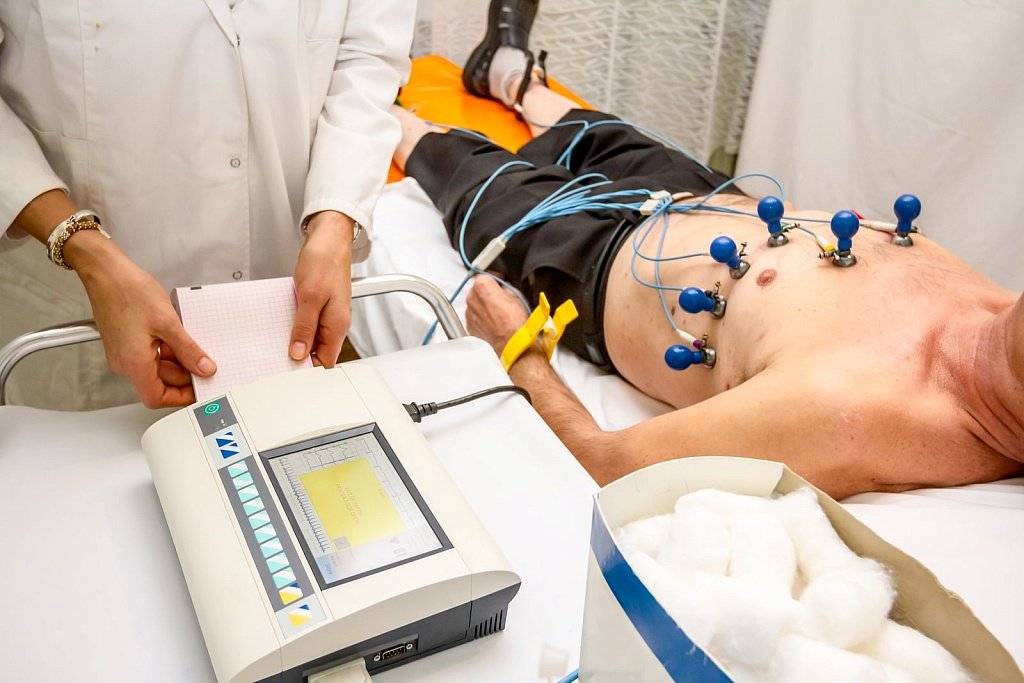
Electrocardiogram (ECG)
An ECG records the electrical activity of your heart through small sensors placed on your chest, arms, and legs. It is a quick, painless test that helps detect abnormal heart rhythms, signs of heart strain, or evidence of a previous heart attack
Holter Monitor and Event Recorder
A Holter monitor is a small portable ECG device worn for 24–48 hours to record your heart rhythm during daily activities, helping detect irregular beats that may not appear in a short ECG. For less frequent symptoms, an event recorder worn for longer periods lets you record your heart rhythm when you feel palpitations, dizziness, or chest discomfort. Both are painless and help diagnose rhythm problems accurately.
Stress Echocardiogram
A stress echocardiogram combines an ultrasound scan of the heart with exercise or medication to make the heart work harder. It shows how well the heart muscle and blood flow respond to stress, helping to identify areas that may not receive enough blood supply. The test is also valuable in assessing how well the heart valves function under stress, providing important information to guide treatment decisions in valve disease.
Transthoracic Echocardiogram (TTE)
A TTE is an ultrasound scan of the heart performed by placing a small probe on your chest. It produces moving images that show how well your heart and valves are working, helping to diagnose a range of heart conditions.
Transoesophageal Echocardiogram (TOE)
A TOE provides detailed ultrasound images of the heart by placing a small probe in the oesophagus (food pipe) while you are sedated. It gives clearer views of certain heart structures, especially the valves, than a standard echocardiogram.
Cardiac CT Scan
A cardiac CT scan uses X-rays to create detailed images of the heart and coronary arteries. It can show calcium build-up or narrowing in the arteries and is often used to assess heart disease risk or investigate chest pain.
Ambulatory Blood Pressure Monitoring
This test measures your blood pressure at regular intervals over 24 hours while you go about your normal activities. It provides a more accurate picture of your blood pressure control and helps confirm or rule out high blood pressure.
Cardiac MRI
A cardiac MRI uses magnetic fields to produce detailed images of the heart without using X-rays. It shows the heart muscle, valves, and blood vessels in high detail and is particularly useful for assessing heart function, detecting scarring, and evaluating certain heart muscle or valve conditions. The scan is painless and usually takes 30–60 minutes while you lie still inside the scanner.